What Does a Diaphragm Seal Do?
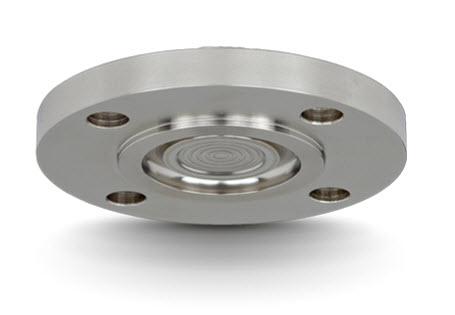
A diaphragm seal has two primary tasks:
1. Separation of the measuring instrument (pressure gauge, pressure transmitter, pressure switch) from the process media.
– Corrosive
– Highly viscous and fibrous
– Crystallisation or polymerisation
– High temperature
– Elimination of dead space (Food & Pharma)
– Toxic or harmful (dual containment)
2. Transfer of the pressure to the measuring instrument
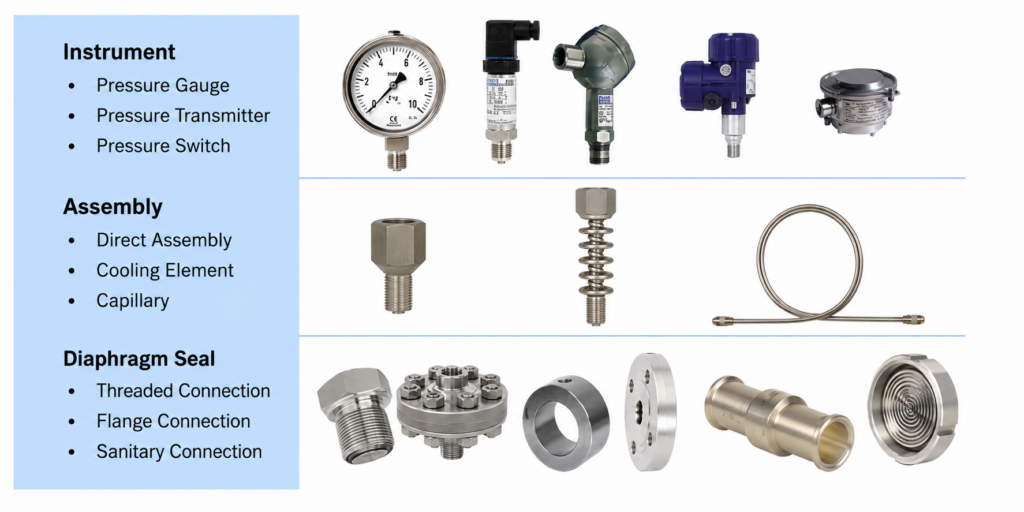
Assembly Options
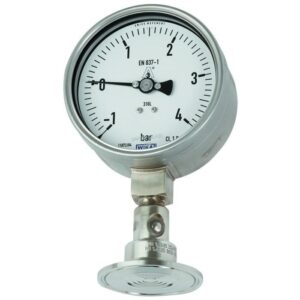
A diaphragm seal system consists of a pressure measuring instrument, a mounting configuration and a diaphragm seal with the appropriate process connection. A wide range of diaphragm seal designs, materials, fill fluids and accessories are available to ensure the optimal solution for virtually any application.
Choosing the Right Specification for Your Application
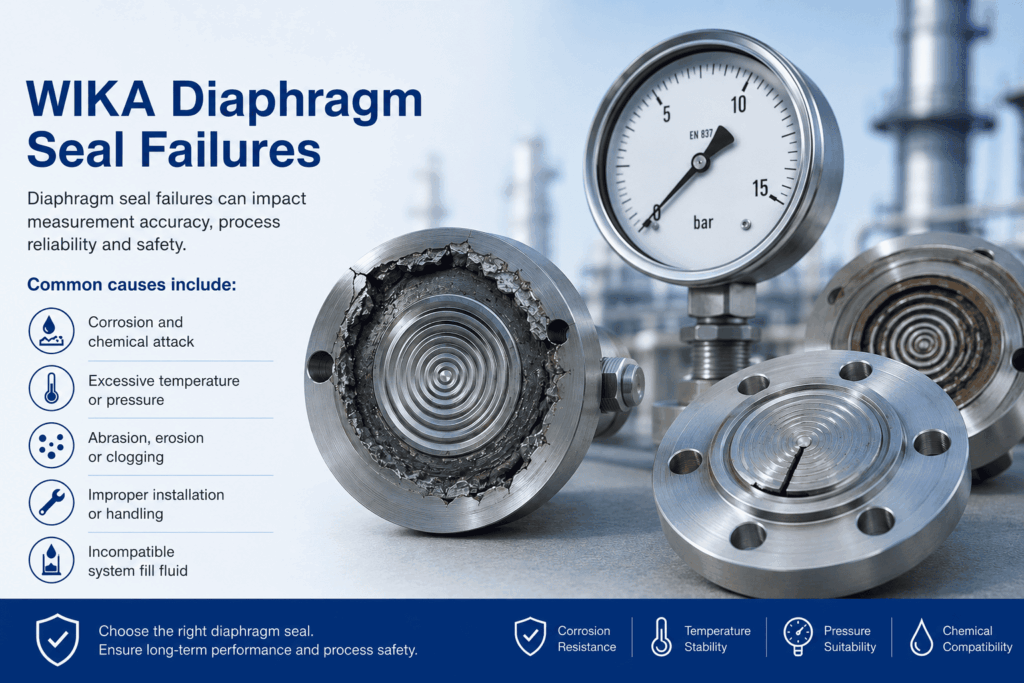
Selecting the correct diaphragm seal system is essential for reliable and accurate pressure measurement. The correct combination of diaphragm seal, pressure gauge or pressure transmitter, process connection, materials and system fill fluid ensures long-term performance in demanding industrial applications.
Choosing the Right Diaphragm Seal Material.
Stainless steel 316L is the standard material used for most diaphragm seals due to its excellent corrosion resistance and durability. For more demanding applications, a wide range of specialist alloys and materials are available to provide enhanced resistance to aggressive chemicals, high temperatures or abrasive media.
Depending on the diaphragm seal design, the body, diaphragm and sealing face can each be manufactured from different materials. This allows the wetted components to be optimised while maintaining a cost-effective overall solution.
Diaphragm Seal Coatings for Corrosive Applications.
Where additional chemical resistance or specialised performance is required, diaphragm seals can be supplied with a range of protective coatings, including:
- ECTFE-coated stainless steel
- PFA-coated stainless steel (FDA compliant)
- Anti-static PFA coating for hazardous (Ex) applications
- Gold-plated stainless steel
- Gold-rhodium plating
- WIKARAMIC® ceramic coating
These coatings provide increased protection against corrosive media while extending service life in challenging process environments.
Selecting the Correct System Fill Fluid.
The selection of the correct system fill fluid is just as important as choosing the diaphragm seal itself. The fill fluid directly influences measurement accuracy, response time and the permissible operating temperature range.
When selecting a fill fluid, the following factors should be considered:
- Process media compatibility
- Operating temperature range
- Pressure conditions
- Fluid expansion at temperature extremes
- Application-specific requirements such as oxygen service, chlorine service, sanitary processes or semiconductor manufacturing
Because every application presents different challenges, a wide range of specialised system fill fluids are available to ensure optimum performance and long-term reliability.
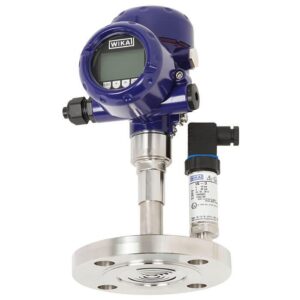
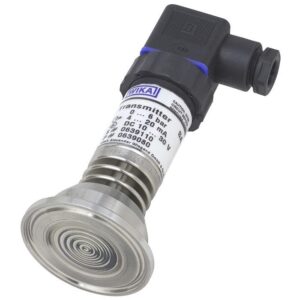
As a WIKA Premium Partner, BKW Instruments can help you specify the ideal diaphragm seal system for your application. Our technical specialists will recommend the right combination of materials, coatings, process connections and system fill fluids to maximise performance, reliability and service life.
Speak to our team today for expert specification advice.